Tafseer · Alimiyyah
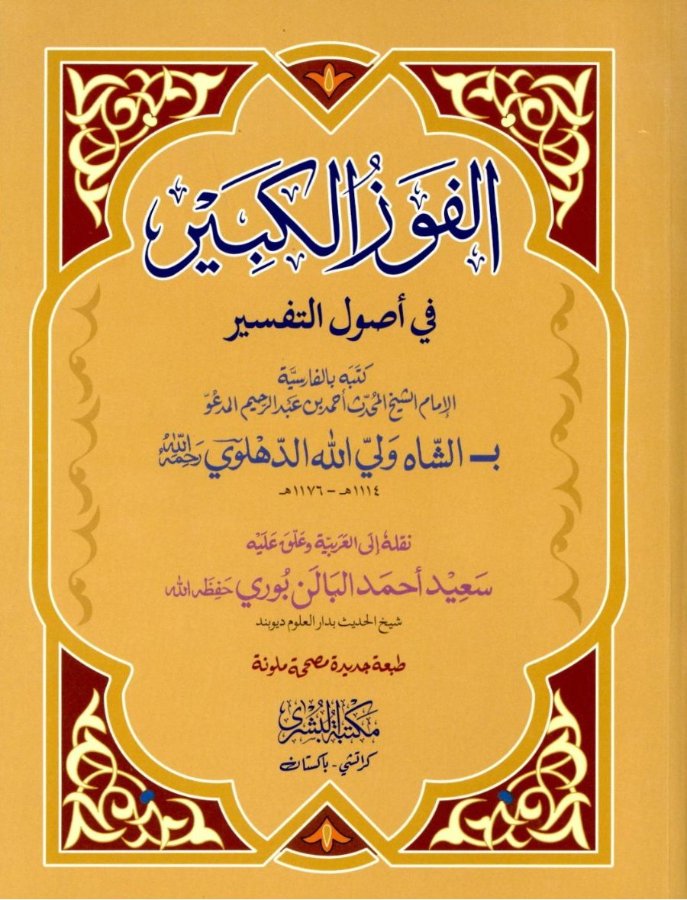
Al-Fawz al-Kabir fi Usul at-Tafsir
الفوز الكبير في أصول التفسير
Al-Fawz al-Kabir fi Usul at-Tafsir is a Tafseer kitab on the Alimiyyah shelf of the Labbaik Library, split into the 21 sections teachers track it by. Add it to a class in one tap and see where every class and student is in it, section by section.
- Publisher
- Maktabat al-Bushra (Al-Bushra Publishers), Karachi — new revised coloured edition, 1432 AH / 2011
- Sections
- 21
- Pages
- 108
Contents of Al-Fawz al-Kabir fi Usul at-Tafsir
The 21 sections teachers mark progress against, in order, with their English names and the printed page numbers.
- 1الحاجة إلى تهذيب التعريبThe need for refining the Arabic translationpp. 5–6
- 2ترجمة الإمام المصنف في سطورBrief biography of the authorpp. 7–8
- 3علم التفسيرThe science of Tafsirpp. 9–10
- 4مقدمة الكتابAuthor's introductionpp. 11–12
- 5الباب الأول: في بيان العلوم الخمسة التي يدل عليها القرآن العظيم نصًّاChapter 1: The five sciences the Quran directly indicatespp. 13–14
- 6الباب الأول — الفصل الأول: في علم الجدلChapter 1, Section 1: The science of disputationpp. 15–32
- 7الباب الأول — الفصل الثاني: في بقية مباحث العلوم الخمسةChapter 1, Section 2: Remaining topics of the five sciencespp. 33–40
- 8الباب الثاني: في بيان وجوه الخفاء في معاني نظم القرآن — الفصل الأول: في شرح غريب القرآنChapter 2 and Section 1: Obscurities in the Quran's meanings; explaining gharibpp. 41–42
- 9الباب الثاني — الفصل الثاني: في معرفة الناسخ والمنسوخChapter 2, Section 2: Abrogating and abrogated versespp. 43–51
- 10الباب الثاني — الفصل الثالث: في معرفة أسباب النزولChapter 2, Section 3: Reasons for revelationpp. 52–57
- 11الباب الثاني — الفصل الرابع: في بقية مباحث هذا البابChapter 2, Section 4: Remaining topics of this chapterpp. 58–72
- 12الباب الثاني — الفصل الخامس: في بيان المحكم والمتشابه والكناية والتعريض والمجاز العقليChapter 2, Section 5: Muhkam, mutashabih, kinayah, ta'rid and rational metaphorpp. 73–76
- 13الباب الثالث: في بيان لطائف نظم القرآن — الفصل الأول: في ترتيب القرآن الكريم وأسلوب السور فيهChapter 3 and Section 1: Subtleties of Quranic arrangement; order of the Quran and style of surahspp. 77–79
- 14الباب الثالث — الفصل الثاني: في تقسيم السور إلى الآيات وأسلوبها الفريدChapter 3, Section 2: Division of surahs into verses and their unique stylepp. 80–88
- 15الباب الثالث — الفصل الثالث: في وجه التكرار في العلوم الخمسة، وعدم الترتيب في بيانهاChapter 3, Section 3: Repetition in the five sciences and lack of orderingp. 89
- 16الباب الثالث — الفصل الرابع: في وجوه إعجاز القرآن الكريمChapter 3, Section 4: Aspects of the Quran's inimitabilitypp. 90–92
- 17الباب الرابع: في بيان مناهج التفسير، وتوضيح الاختلاف الواقع في تفاسير الصحابة والتابعينChapter 4: Methods of Tafsir and differences among the Companions and Followerspp. 93–94
- 18الباب الرابع — الفصل الأول: في بيان الآثار المروية في تفاسير أصحاب الحديثChapter 4, Section 1: Narrated reports in the tafsir of the Muhaddithinpp. 95–100
- 19الباب الرابع — الفصل الثاني: في بقية لطائف هذا البابChapter 4, Section 2: Remaining subtleties of this chapterpp. 101–104
- 20الباب الرابع — الفصل الثالث: في بيان غرائب القرآن الكريمChapter 4, Section 3: The gharaib of the Quranpp. 105–106
- 21الباب الرابع — الفصل الرابع: في بيان بعض العلوم الوهبيةChapter 4, Section 4: Some God-given sciencespp. 107–108
Only the cover and this outline are shared, never the kitab’s contents. All credit belongs to its author and publisher.
Tracking Al-Fawz al-Kabir fi Usul at-Tafsir in Labbaik
- Add it to a class. Pick it from the Library in one tap. Its sections come with it, so nobody types out a contents page.
- Mark progress as you teach. The ustadh marks each section as the class reaches it, and can mark any student who is ahead or behind.
- See where everyone is. The principal sees every year group's place in every kitab, and adult students see their own progress in the portal.
More on running an Alimiyyah programme: Labbaik for Darul Ulooms and Islamic institutes, the Dars-e-Nizami syllabus year by year, and the guide to Darul Uloom software.
More Tafseer kitabs in the Library
- Al-Awn al-Kabir Sharh al-Fawz al-Kabir fi Usul at-Tafsir · العون الكبير شرح الفوز الكبير في اصول التفسير
- Al-Mufassal fi Tafsir al-Quran al-Karim (Tafsir al-Jalalayn) · المفصل في تفسير القرآن الكريم (تفسير الجلالين)
- At-Tibyan fi Ulum al-Quran · التبيان في علوم القرآن
- Hashiyat al-Qunawi ala Tafsir al-Baydawi · حاشية القونوي على تفسير البيضاوي
- Hashiyat al-Shihab ala Tafsir al-Baydawi (Inayat al-Qadi wa Kifayat al-Radi) · حاشية الشهاب المسماة عناية القاضي وكفاية الراضي على تفسير البيضاوي
- Hashiyat as-Sialkoti on Tafsir al-Baydawi · Hashiyat al-Sialkoti ala al-Baydawi
- Hashiyat Muhyi al-Din Shaykh Zadah ala Tafsir al-Baydawi · حاشية محيي الدين شيخ زاده على تفسير القاضي البيضاوي
- Tafsir al-Baydawi (Anwar al-Tanzil wa Asrar al-Ta'wil) · التفسير البيضاوي
- Tafsir al-Jalalayn (Jalalain Kalan) · تفسیر جلالین کلاں
- Tafsir al-Quran al-Azim (Tafsir Ibn Kathir) · تفسير القرآن العظيم