Balaghah · Alimiyyah
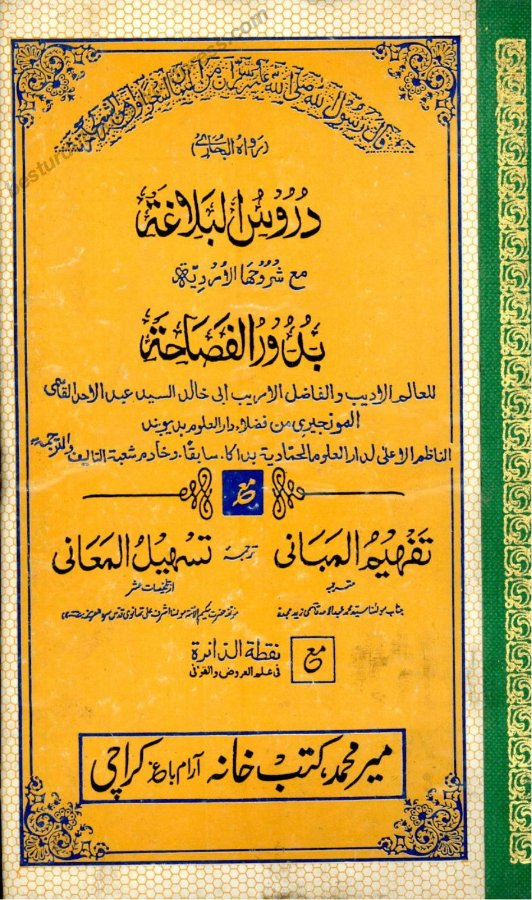
Duroos ul-Balagha with Badoor al-Fasahah (Urdu commentary)
دروس البلاغۃ مع شروحہا الاردیۃ بدور الفصاحۃ
Duroos ul-Balagha with Badoor al-Fasahah (Urdu commentary) is a Balaghah kitab on the Alimiyyah shelf of the Labbaik Library, split into the 34 sections teachers track it by. Add it to a class in one tap and see where every class and student is in it, section by section.
- Publisher
- Mir Muhammad Kutub Khana, Aram Bagh, Karachi
- Sections
- 34
- Pages
- 296
Contents of Duroos ul-Balagha with Badoor al-Fasahah (Urdu commentary)
The 34 sections teachers mark progress against, in order, with their English names and the printed page numbers.
- 1مقدمہ شرح وخطبہ دروس البلاغۃIntroduction to the commentary and preface of Duroos ul-Balaghapp. 2–7
- 2علوم البلاغۃ (مقدمۃ فی الفصاحۃ والبلاغۃ)Sciences of Balagha (introduction on fasahah and balaghah)pp. 8–18
- 3علم المعانیIlm al-Ma'anipp. 19–20
- 4الباب الاول فی الخبر والانشاءChapter 1: Khabar and Inshap. 21
- 5الکلام علی الخبرDiscussion on Khabarpp. 22–27
- 6الکلام علی الانشاءDiscussion on Inshapp. 28–48
- 7الباب الثانی فی الذکر والحذفChapter 2: Mention and omissionpp. 49–55
- 8الباب الثالث فی التقدیم والتاخیرChapter 3: Precedence and postponementpp. 56–59
- 9الباب الرابع فی التعریف والتنکیرChapter 4: Definiteness and indefinitenesspp. 60–64
- 10الباب الخامس فی الاطلاق والتقییدChapter 5: Absoluteness and restrictionpp. 65–83
- 11الباب السادس فی القصرChapter 6: Qasr (restriction)pp. 84–89
- 12الباب السابع فی الوصل والفصلChapter 7: Wasl and Faslpp. 90–93
- 13الباب الثامن فی الایجاز والاطناب والمساواتChapter 8: Brevity, elaboration and equivalencepp. 94–99
- 14اقسام الایجازTypes of Ijazpp. 100–102
- 15اقسام الاطنابTypes of Itnabpp. 103–109
- 16الخاتمۃ فی اخراج الکلامConclusion: departure of speech from its normal formpp. 110–120
- 17علم البیانIlm al-Bayanp. 121
- 18التشبیہTashbih (simile)pp. 122–123
- 19المبحث الاول فی ارکان التشبیہPart 1: Components of Tashbihpp. 124–128
- 20المبحث الثانی فی اقسام التشبیہPart 2: Types of Tashbihpp. 129–136
- 21المبحث الثالث فی اغراض التشبیہPart 3: Purposes of Tashbihpp. 137–141
- 22المجازMajazpp. 142–144
- 23الاستعارۃIsti'arah (metaphor)pp. 145–150
- 24المجاز المرسلMajaz Mursalpp. 151–153
- 25المجاز المرکبMajaz Murakkabpp. 154–155
- 26المجاز العقلیMajaz Aqlipp. 156–157
- 27الکنایۃKinayahpp. 158–162
- 28علم البدیع (محسنات معنویہ)Ilm al-Badi' (semantic embellishments)pp. 163–188
- 29محسنات لفظیہVerbal embellishmentspp. 189–201
- 30خاتمۃConclusionpp. 202–215
- 31تنبیہNoticepp. 216–221
- 32نقطۃ الدائرۃNuqtat ad-Da'irah (prosody)pp. 222–239
- 33واضع العروض والقافیۃFounder of Arud and Qafiyahp. 240
- 34تفہیم المبانی (ترجمہ تسہیل المعانی)Tafhim al-Mabani (translation of Tas-hil al-Ma'ani)pp. 241–296
Only the cover and this outline are shared, never the kitab’s contents. All credit belongs to its author and publisher.
Tracking Duroos ul-Balagha with Badoor al-Fasahah (Urdu commentary) in Labbaik
- Add it to a class. Pick it from the Library in one tap. Its sections come with it, so nobody types out a contents page.
- Mark progress as you teach. The ustadh marks each section as the class reaches it, and can mark any student who is ahead or behind.
- See where everyone is. The principal sees every year group's place in every kitab, and adult students see their own progress in the portal.
More on running an Alimiyyah programme: Labbaik for Darul Ulooms and Islamic institutes, the Dars-e-Nizami syllabus year by year, and the guide to Darul Uloom software.
More Balaghah kitabs in the Library
- Al-Balaghah al-Wadihah · البلاغة الواضحة
- Al-Hashiya ala al-Mutawwal (Hashiyat al-Sharif al-Jurjani ala al-Mutawwal) · الحاشية على المطول
- Duroos ul-Balaghah (with Shumus al-Bara'ah) · دروس البلاغة
- Mukhtasar al-Ma'ani · مختصر المعاني