Manṭiq (Logic) · Alimiyyah
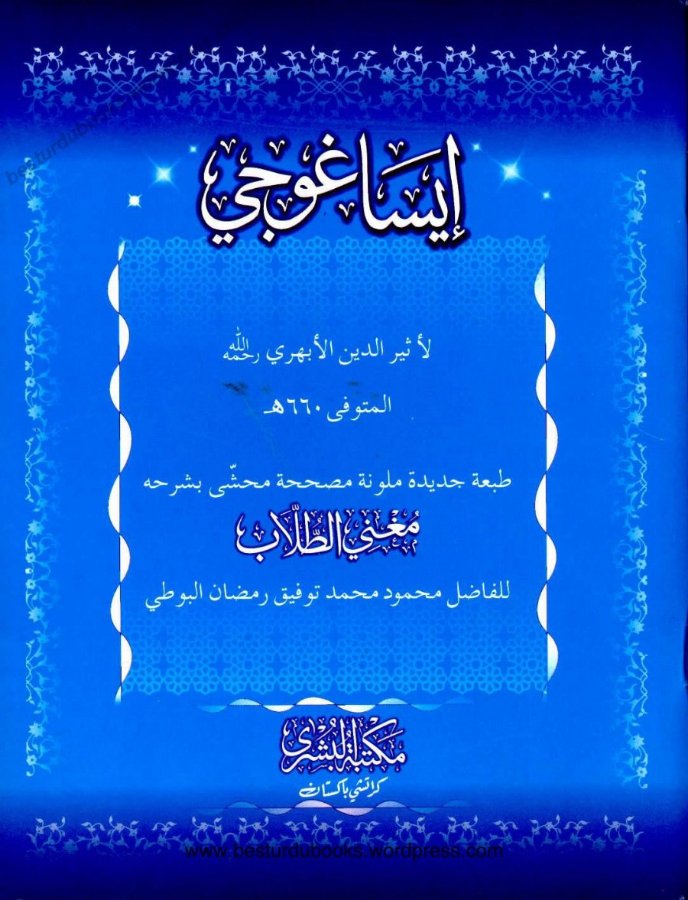
Isagoji (with the commentary Mughni at-Tullab)
إيساغوجي (مع شرحه مغني الطلاب)
Isagoji (with the commentary Mughni at-Tullab) is a Manṭiq (Logic) kitab on the Alimiyyah shelf of the Labbaik Library, split into the 14 sections teachers track it by. Add it to a class in one tap and see where every class and student is in it, section by section.
- Publisher
- Maktabat al-Bushra (Al-Bushra Publishers), Karachi; new coloured edition 1432 AH / 2011
- Sections
- 14
- Pages
- 50
Contents of Isagoji (with the commentary Mughni at-Tullab)
The 14 sections teachers mark progress against, in order, with their English names and the printed page numbers.
- 1مقدمة: خطبة الكتابIntroduction: the author's prefacepp. 5–7
- 2التصورات: بحث الدلالةConcepts: the discussion of signification (dalalah)pp. 8–11
- 3التصورات: الكليات الخمسConcepts: the five universalspp. 12–16
- 4التصورات: بحث الحد والرسمConcepts: definition (hadd and rasm)pp. 17–18
- 5التصديقات: مباحث القضايا وأحكامهاJudgments: propositions and their rulingspp. 19–24
- 6التناقض وشرائطهContradiction and its conditionspp. 25–27
- 7العكس وعكس المحصورات الأربعةConversion and conversion of the four quantified propositionspp. 28–31
- 8القياسSyllogism (qiyas)p. 32
- 9تقسيم القياس إلى قسمينDivision of the syllogism into two typespp. 33–35
- 10أشكال القياسFigures of the syllogismpp. 36–37
- 11كيفية الترديد إلى الشكل الأولHow to reduce to the first figurepp. 38–40
- 12القياس الاقترانيThe conjunctive syllogismpp. 41–42
- 13القياس الاستثنائيThe exceptive syllogismpp. 43–44
- 14تقسيم القياس باعتبار مادته (الصناعات الخمس)Division of the syllogism by its matter (the five arts)pp. 45–50
Only the cover and this outline are shared, never the kitab’s contents. All credit belongs to its author and publisher.
Tracking Isagoji (with the commentary Mughni at-Tullab) in Labbaik
- Add it to a class. Pick it from the Library in one tap. Its sections come with it, so nobody types out a contents page.
- Mark progress as you teach. The ustadh marks each section as the class reaches it, and can mark any student who is ahead or behind.
- See where everyone is. The principal sees every year group's place in every kitab, and adult students see their own progress in the portal.
More on running an Alimiyyah programme: Labbaik for Darul Ulooms and Islamic institutes, the Dars-e-Nizami syllabus year by year, and the guide to Darul Uloom software.
More Manṭiq (Logic) kitabs in the Library
- Al-Hadiyyah al-Sa'idiyyah (with the footnotes al-Tuhfah al-'Aliyyah) · الهدية السعيدية مع الحاشية التحفة العلية
- Al-Mirqat (with the commentary Al-Mir'at) · المرقاة مع حاشيتها المرآة
- Al-Qutbi (Sharh ar-Risalah ash-Shamsiyyah) · القطبي
- Hidayat al-Hikmah · هداية الحكمة
- Mabadi al-Falsafah · مبادئ الفلسفة
- Sharh Tahdhib (with Tuhfa Shahjahani) · شرح تهذيب مع الحاشية تحفه شاهجاني
- Tahdhib al-Mantiq with Hashiyat al-Subhani · تهذيب المنطق مع حاشية السبحاني
- Taisir al-Mantiq · تیسیر المنطق