Adab · Alimiyyah
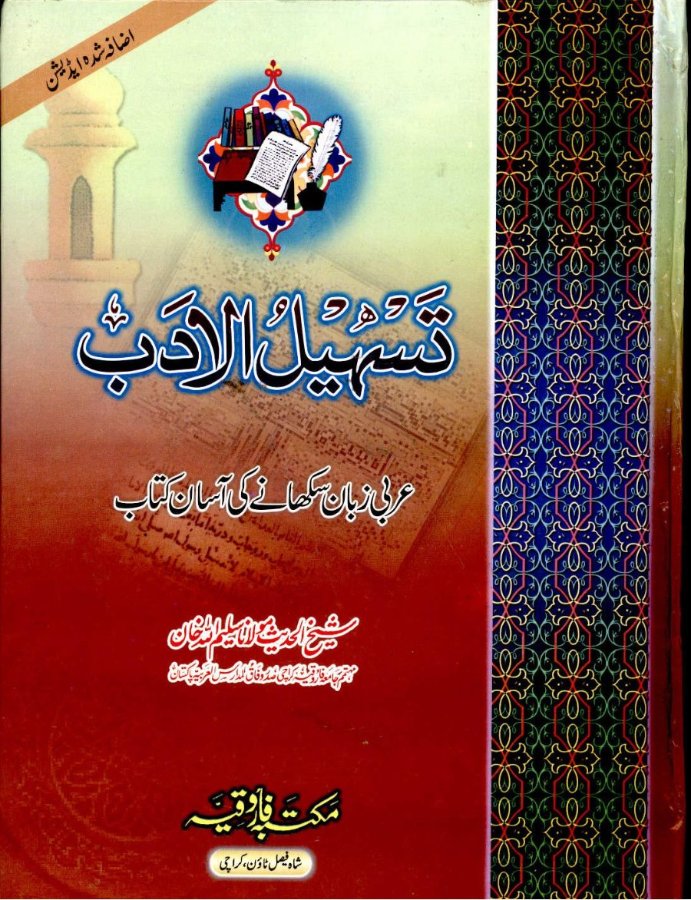
Tasheel ul Adab
تسہیل الادب
Tasheel ul Adab is an Adab kitab on the Alimiyyah shelf of the Labbaik Library, split into the 36 sections teachers track it by. Add it to a class in one tap and see where every class and student is in it, section by section.
- Publisher
- Maktabah Farooqia, Karachi (expanded edition, 2010/1431 AH)
- Sections
- 36
- Pages
- 200
Contents of Tasheel ul Adab
The 36 sections teachers mark progress against, in order, with their English names and the printed page numbers.
- 1الحصة الأولى – الدرس الأول: الاسمPart 1 – Lesson 1: The noun (ism)pp. 9–10
- 2الحصة الأولى – الدرس الثاني: النكرة والمعرفةPart 1 – Lesson 2: Indefinite and definitepp. 11–14
- 3الحصة الأولى – الدرس الثالث: المذكر والمؤنثPart 1 – Lesson 3: Masculine and femininepp. 15–18
- 4الحصة الأولى – الدرس الرابع: اسم الإشارةPart 1 – Lesson 4: Demonstrative nounspp. 19–21
- 5الحصة الأولى – الدرس الخامس: المثنى والجمعPart 1 – Lesson 5: Dual and pluralpp. 22–25
- 6الحصة الأولى – الدرس السادس: الضمائرPart 1 – Lesson 6: Pronounspp. 26–33
- 7الحصة الأولى – الدرس السابع: المضاف والمضاف إليهPart 1 – Lesson 7: Mudaf and mudaf ilayhpp. 34–37
- 8الحصة الأولى – الدرس الثامن: الموصوف والصفةPart 1 – Lesson 8: Described noun and adjectivepp. 38–41
- 9الحصة الأولى – الدرس التاسع: حروف الجرPart 1 – Lesson 9: Prepositionspp. 42–44
- 10الحصة الأولى – الدرس العاشر: المبتدأ والخبرPart 1 – Lesson 10: Mubtada and khabarpp. 45–48
- 11الحصة الأولى – الدرس الحادي عشر: المبتدأ إذا كان ضميراًPart 1 – Lesson 11: Mubtada as a pronounpp. 49–51
- 12الحصة الأولى – الدرس الثاني عشر: المبتدأ إذا كان اسم الإشارةPart 1 – Lesson 12: Mubtada as a demonstrative nounpp. 52–57
- 13الحصة الأولى – الدرس الثالث عشر: المبتدأ إذا كان مركباً إضافياًPart 1 – Lesson 13: Mubtada as an idafi compoundpp. 58–61
- 14الحصة الأولى – الدرس الرابع عشر: المبتدأ إذا كان مركباً توصيفياًPart 1 – Lesson 14: Mubtada as a descriptive compoundpp. 62–65
- 15الحصة الأولى – الدرس الخامس عشر: المبتدأ إذا كان مركباً إضافياًPart 1 – Lesson 15: Idafi compound (as printed)pp. 66–68
- 16الحصة الأولى – الدرس السادس عشر: الخبر إذا كان مركباً توصيفياًPart 1 – Lesson 16: Khabar as a descriptive compoundpp. 69–71
- 17الحصة الأولى – الدرس السابع عشر: الخبر إذا كان مركباً من الجار والمجرورPart 1 – Lesson 17: Khabar as jar and majrurpp. 72–76
- 18الحصة الأولى – الدرس الثامن عشر: كلمات الاستفهامPart 1 – Lesson 18: Interrogative wordspp. 77–86
- 19الحصة الثانية – الدرس الأول: الفعل الماضيPart 2 – Lesson 1: The past tense verbpp. 87–90
- 20الحصة الثانية – الدرس الثاني: الفعل المضارعPart 2 – Lesson 2: The present tense verbpp. 91–97
- 21الحصة الثانية – الدرس الثالث: الفاعل والمفعول بهPart 2 – Lesson 3: Subject and objectpp. 98–103
- 22الحصة الثانية – الدرس الرابع: الفاعل إذا كان جمعاً أو مثنىPart 2 – Lesson 4: Subject as plural or dualpp. 104–109
- 23الحصة الثانية – الدرس الخامس: الفاعل إذا كان ضميراًPart 2 – Lesson 5: Subject as a pronounpp. 110–114
- 24الحصة الثانية – الدرس السادس: المفعول به إذا كان مثنى أو جمعاًPart 2 – Lesson 6: Object as dual or pluralpp. 115–119
- 25الحصة الثانية – الدرس السابع: أقسام الماضيPart 2 – Lesson 7: Types of the past tensepp. 120–129
- 26الحصة الثانية – الدرس الثامن: المعروف والمجهول في الماضيPart 2 – Lesson 8: Active and passive in the past tensepp. 130–136
- 27الحصة الثانية – الدرس التاسع: المثبت والمنفي في الماضيPart 2 – Lesson 9: Affirmative and negative in the past tensepp. 137–141
- 28الحصة الثانية – الدرس العاشر: المعروف والمجهول في المضارعPart 2 – Lesson 10: Active and passive in the present tensepp. 142–148
- 29الحصة الثانية – الدرس الحادي عشر: المنفي والمثبت في المضارعPart 2 – Lesson 11: Negative and affirmative in the present tensepp. 149–152
- 30الحصة الثانية – الدرس الثاني عشر: الماضي الاستمراري والمنفي والمثبت والمعروف والمجهولPart 2 – Lesson 12: Continuous past, negative, affirmative, active and passivepp. 153–158
- 31الحصة الثانية – الدرس الثالث عشر: فعل الأمرPart 2 – Lesson 13: The imperativepp. 159–165
- 32الحصة الثانية – الدرس الرابع عشر: فعل النهيPart 2 – Lesson 14: The prohibitionpp. 166–171
- 33الحصة الثانية – الدرس الخامس عشر: نفي الفعل بـ "لم ولمّا"Part 2 – Lesson 15: Negating the verb with lam and lammapp. 172–178
- 34الحصة الثانية – الدرس السادس عشر: نفي المضارع بـ "لن"Part 2 – Lesson 16: Negating the present with lanpp. 179–184
- 35الحصة الثانية – الدرس السابع عشر: نصب المضارع بـ "أن" و"كي" و"إذن"Part 2 – Lesson 17: Nasb of the present with an, kay and idhanpp. 185–190
- 36الحصة الثانية – الدرس الثامن عشر: إنّ وأخواتهاPart 2 – Lesson 18: Inna and its sisterspp. 191–200
Only the cover and this outline are shared, never the kitab’s contents. All credit belongs to its author and publisher.
Tracking Tasheel ul Adab in Labbaik
- Add it to a class. Pick it from the Library in one tap. Its sections come with it, so nobody types out a contents page.
- Mark progress as you teach. The ustadh marks each section as the class reaches it, and can mark any student who is ahead or behind.
- See where everyone is. The principal sees every year group's place in every kitab, and adult students see their own progress in the portal.
More on running an Alimiyyah programme: Labbaik for Darul Ulooms and Islamic institutes, the Dars-e-Nizami syllabus year by year, and the guide to Darul Uloom software.
More Adab kitabs in the Library
- Al-Maqamat al-Hariri (with at-Ta'liqat al-Arabiyyah) · المقامات الحريرية مع التعليقات العربية
- Al-Qira'ah ar-Rashidah · القراءة الراشدة
- Qasas un-Nabiyyin · قصص النبيين
- Sharh Maqamat al-Hariri (al-Sharishi) · شرح مقامات الحريري المعروف بالشريشي
- Ta'lim al-Muta'allim Tariq at-Ta'allum · تعليم المتعلم طريق التعلم