Balaghah · Alimiyyah
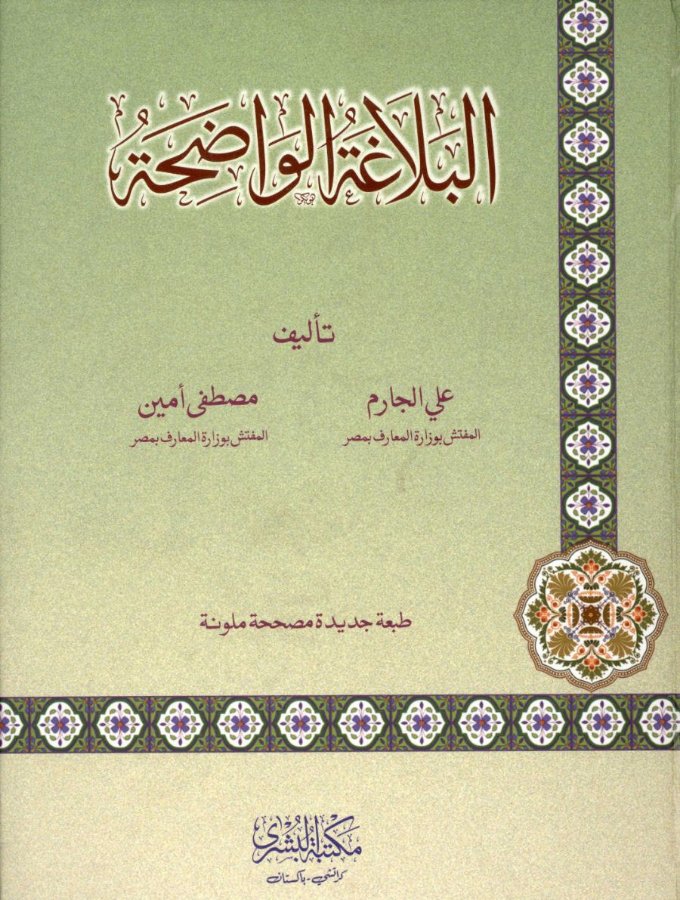
Al-Balaghah al-Wadihah
البلاغة الواضحة
Al-Balaghah al-Wadihah is a Balaghah kitab on the Alimiyyah shelf of the Labbaik Library, split into the 31 sections teachers track it by. Add it to a class in one tap and see where every class and student is in it, section by section.
- Publisher
- Maktabat al-Bushra, Karachi (new revised coloured edition)
- Sections
- 31
- Pages
- 279
Contents of Al-Balaghah al-Wadihah
The 31 sections teachers mark progress against, in order, with their English names and the printed page numbers.
- 1المقدمة: الفصاحة - البلاغة - الأسلوبIntroduction: Fasahah, Balaghah, Uslubpp. 5–16
- 2علم البيان: التشبيهIlm al-Bayan: Tashbih (simile)pp. 17–63
- 3الحقيقة والمجاز والمجاز اللغويHaqiqah and Majaz; linguistic Majazpp. 64–69
- 4الاستعارةIsti'arah (metaphor)pp. 70–99
- 5المجاز المرسل وعلاقاتهAl-Majaz al-Mursal and its relationspp. 100–106
- 6المجاز العقليAl-Majaz al-Aqlipp. 107–113
- 7الكنايةKinayah (metonymy)pp. 114–122
- 8أثر علم البيان في تأدية المعانيEffect of Ilm al-Bayan in conveying meaningspp. 123–127
- 9علم المعاني: تقسيم الكلام إلى خبر وإنشاءIlm al-Ma'ani: Division of speech into Khabar and Inshapp. 128–133
- 10الخبر: الغرض من إلقاء الخبر وأضرب الخبرKhabar: its purpose and typespp. 134–149
- 11خروج الخبر عن مقتضى الظاهرKhabar departing from the apparent requirementpp. 150–153
- 12الإنشاء وتقسيمه إلى طلبي وغير طلبيInsha and its division into talabi and ghayr talabipp. 154–161
- 13الأمرAl-Amr (command)pp. 162–170
- 14النهيAn-Nahy (prohibition)pp. 171–177
- 15الاستفهامAl-Istifham (interrogation)pp. 178–190
- 16التمنيAt-Tamanni (wish)pp. 191–194
- 17النداءAn-Nida (vocative)pp. 195–200
- 18القصرAl-Qasr (restriction)pp. 201–210
- 19الفصل والوصلAl-Fasl wal-Waslpp. 211–221
- 20الإيجاز والإطناب والمساواةIjaz, Itnab and Musawahpp. 222–238
- 21أثر علم المعاني في بلاغة الكلامEffect of Ilm al-Ma'ani on eloquencepp. 239–243
- 22علم البديع: الجناسIlm al-Badi: Jinaspp. 244–248
- 23الاقتباسIqtibaspp. 249–251
- 24السجعSaj'pp. 252–254
- 25التوريةTawriyahpp. 255–258
- 26الطباقTibaqpp. 259–262
- 27المقابلةMuqabalahpp. 263–266
- 28حسن التعليلHusn at-Ta'lilpp. 267–269
- 29تأكيد المدح بما يشبه الذم وعكسهEmphasising praise by what resembles blame and vice versapp. 270–272
- 30أسلوب الحكيمUslub al-Hakimpp. 273–276
- 31أسئلة امتحان شهادة الدراسة الثانويةSecondary certificate exam questionspp. 277–279
Only the cover and this outline are shared, never the kitab’s contents. All credit belongs to its author and publisher.
Tracking Al-Balaghah al-Wadihah in Labbaik
- Add it to a class. Pick it from the Library in one tap. Its sections come with it, so nobody types out a contents page.
- Mark progress as you teach. The ustadh marks each section as the class reaches it, and can mark any student who is ahead or behind.
- See where everyone is. The principal sees every year group's place in every kitab, and adult students see their own progress in the portal.
More on running an Alimiyyah programme: Labbaik for Darul Ulooms and Islamic institutes, the Dars-e-Nizami syllabus year by year, and the guide to Darul Uloom software.
More Balaghah kitabs in the Library
- Al-Hashiya ala al-Mutawwal (Hashiyat al-Sharif al-Jurjani ala al-Mutawwal) · الحاشية على المطول
- Duroos ul-Balagha with Badoor al-Fasahah (Urdu commentary) · دروس البلاغۃ مع شروحہا الاردیۃ بدور الفصاحۃ
- Duroos ul-Balaghah (with Shumus al-Bara'ah) · دروس البلاغة
- Mukhtasar al-Ma'ani · مختصر المعاني