Arabic · Alimiyyah
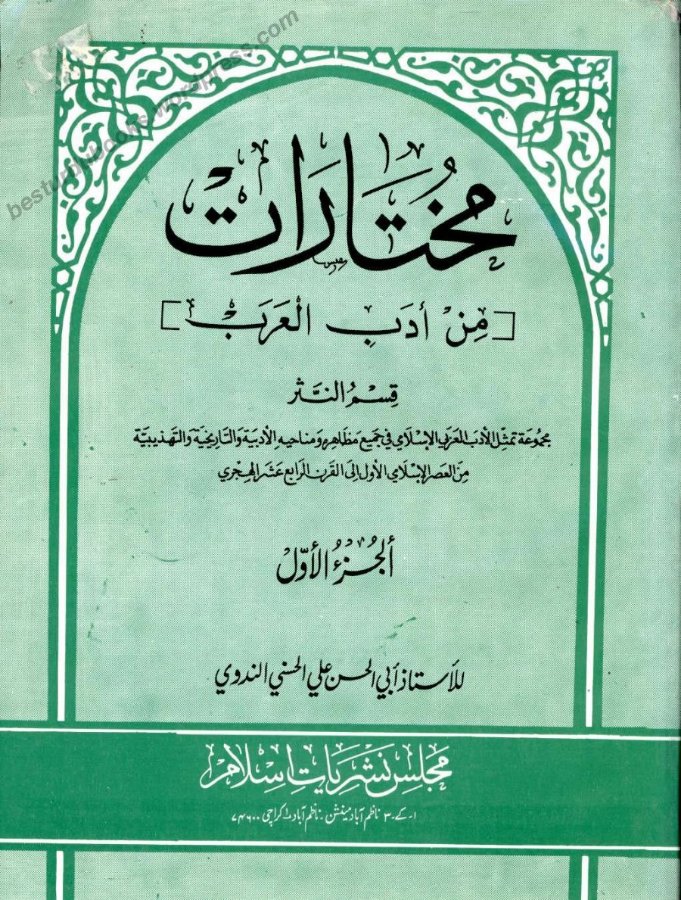
Mukhtarat min Adab al-Arab (Prose), Part 1
مختارات من أدب العرب (قسم النثر) - الجزء الأول
Mukhtarat min Adab al-Arab (Prose), Part 1 is an Arabic kitab on the Alimiyyah shelf of the Labbaik Library, split into the 34 sections teachers track it by. Add it to a class in one tap and see where every class and student is in it, section by section.
- Publisher
- Majlis Nashriyat-e-Islam, Karachi, 1991
- Sections
- 34
- Pages
- 159
Contents of Mukhtarat min Adab al-Arab (Prose), Part 1
The 34 sections teachers mark progress against, in order, with their English names and the printed page numbers.
- 1مقدمة الكتابIntroduction to the bookpp. 7–20
- 2عباد الرحمن (القرآن)The servants of the Merciful (Quran)pp. 21–22
- 3سيدنا موسى (القرآن)Prophet Musa (Quran)pp. 23–26
- 4جوامع الكلم (سيدنا محمد ﷺ)Jawami' al-Kalim (Prophet Muhammad)pp. 27–28
- 5الخطابة المعجزة (سيدنا محمد ﷺ)The miraculous oratorypp. 29–30
- 6في بني سعد (سيرة ابن هشام)Among Banu Sa'd (Sirat Ibn Hisham)pp. 31–33
- 7كيف هاجر النبي ﷺ (أم المؤمنين عائشة)How the Prophet migrated (A'isha)pp. 34–40
- 8ابتلاء كعب بن مالك رضي الله عنهThe trial of Ka'b ibn Malikpp. 41–46
- 9مقتل عمر بن الخطاب رضي الله عنه (عمرو بن ميمون)The martyrdom of Umar ibn al-Khattabpp. 47–51
- 10أخلاق المؤمن (الحسن البصري)Character of the believer (Hasan al-Basri)pp. 52–53
- 11اخوان الصفا (ابن المقفع)Brothers of sincerity (Ibn al-Muqaffa')pp. 54–57
- 12وصف الزاهد (ابن السماك)Description of the ascetic (Ibn al-Sammak)pp. 58–60
- 13بين السيدة زبيدة والمأمونBetween Zubaida and al-Ma'munpp. 61–62
- 14بين قاض وقور وذباب جسور (الجاحظ)A dignified judge and a bold fly (al-Jahiz)pp. 63–65
- 15القميص الأحمر (ابن عبد ربه)The red shirt (Ibn Abd Rabbih)pp. 66–69
- 16كيف كان معاوية يقضي يومه (المسعودي)How Mu'awiya spent his day (al-Mas'udi)pp. 70–72
- 17استقامة الإمام أحمد بن حنبل وكرمه (ابن حبان البستي)Steadfastness and generosity of Imam Ahmadpp. 73–75
- 18اشعب والبخيل (أبو الفرج الأصبهاني)Ash'ab and the miserpp. 76–78
- 19رسالة عتاب (أبو بكر الخوارزمي)A letter of reproach (al-Khwarizmi)pp. 79–80
- 20حديث الناس (أبو حيان التوحيدي)Talk of the people (Abu Hayyan al-Tawhidi)pp. 81–85
- 21في سبيل السعادة واليقين (الإمام الغزالي)On the path to happiness and certainty (al-Ghazali)pp. 86–89
- 22وفاة السلطان صلاح الدين الأيوبي (ابن شداد)Death of Sultan Salah al-Din (Ibn Shaddad)pp. 90–94
- 23علو الهمة (ابن الجوزي)Loftiness of aspiration (Ibn al-Jawzi)pp. 95–97
- 24سيد التابعين سعيد بن المسيب (ابن خلكان)Sa'id ibn al-Musayyib (Ibn Khallikan)pp. 98–101
- 25النبوة المحمدية وآباؤها (ابن تيمية)Muhammadan prophethood and its forebears (Ibn Taymiyya)pp. 102–106
- 26الظلم مؤذن بخراب العمران (ابن خلدون)Injustice portends ruin of civilization (Ibn Khaldun)pp. 107–109
- 27المدينة العجمية عند بعثة الرسول ﷺ (الشيخ ولي الله الدهلوي)Non-Arab civilization at the Prophet's mission (Shah Waliullah)pp. 110–112
- 28أهل الطبقة العليا من الأمة (السيد عبد الرحمن الكواكبي)The upper class of the nation (al-Kawakibi)pp. 113–115
- 29رسالة محمد ﷺ (الشيخ محمد عبده)The message of Muhammad (Muhammad Abduh)pp. 116–124
- 30الكوخ والقصر (مصطفى لطفي المنفلوطي)The hut and the palace (al-Manfaluti)pp. 125–126
- 31سيدي أحمد الشريف السنوسي (الأمير شكيب أرسلان)Sayyidi Ahmad al-Sharif al-Sanusi (Shakib Arslan)pp. 127–135
- 32الدين الصناعي (الدكتور أحمد أمين)Artificial religion (Ahmad Amin)pp. 136–139
- 33سالم مولى أبي حذيفة (الدكتور طه حسين)Salim, freedman of Abu Hudhayfa (Taha Husayn)pp. 140–148
- 34الفردوس الإسلامي في قارة آسيا (الأستاذ علي الطنطاوي)The Islamic paradise in Asia (Ali al-Tantawi)pp. 149–159
Only the cover and this outline are shared, never the kitab’s contents. All credit belongs to its author and publisher.
Tracking Mukhtarat min Adab al-Arab (Prose), Part 1 in Labbaik
- Add it to a class. Pick it from the Library in one tap. Its sections come with it, so nobody types out a contents page.
- Mark progress as you teach. The ustadh marks each section as the class reaches it, and can mark any student who is ahead or behind.
- See where everyone is. The principal sees every year group's place in every kitab, and adult students see their own progress in the portal.
More on running an Alimiyyah programme: Labbaik for Darul Ulooms and Islamic institutes, the Dars-e-Nizami syllabus year by year, and the guide to Darul Uloom software.
More Arabic kitabs in the Library
- Al-Mu'allaqat as-Sab' with al-Zawzani's commentary · المعلقات السبع مع الحواشي المفيدة للزوزني
- Al-Tariqah al-Asriyyah fi Ta'lim al-Lughah al-Arabiyyah, Part 1 · الطريقة العصرية في تعليم اللغة العربية - الجزء الأول
- Diwan al-Hamasah · ديوان الحماسة
- Diwan al-Mutanabbi with as-Sahab as-Sayyib · ديوان المتنبي مع السحاب الصيب على ديوان أبي الطيب
- Matn al-Kafi with al-Mukhtasar ash-Shafi · متن الكافي مع شرحه المختصر الشافي
- Mu'allim al-Insha, Part 1 · معلم الانشاء (حصہ اول)
- Mu'allim al-Insha, Part 2 · معلم الانشاء (حصہ دوم)
- Mu'allim al-Insha, Part 3 · معلم الانشاء (حصہ سوم)
- Nafhat al-Arab · نفحة العرب
- Nafhat al-Yaman · نفحة اليمن فيما يزول بذكره الشجن
- Sharh Diwan al-Hamasa (al-Marzuqi) · شرح ديوان الحماسة لأبي تمام