Hadith · Alimiyyah
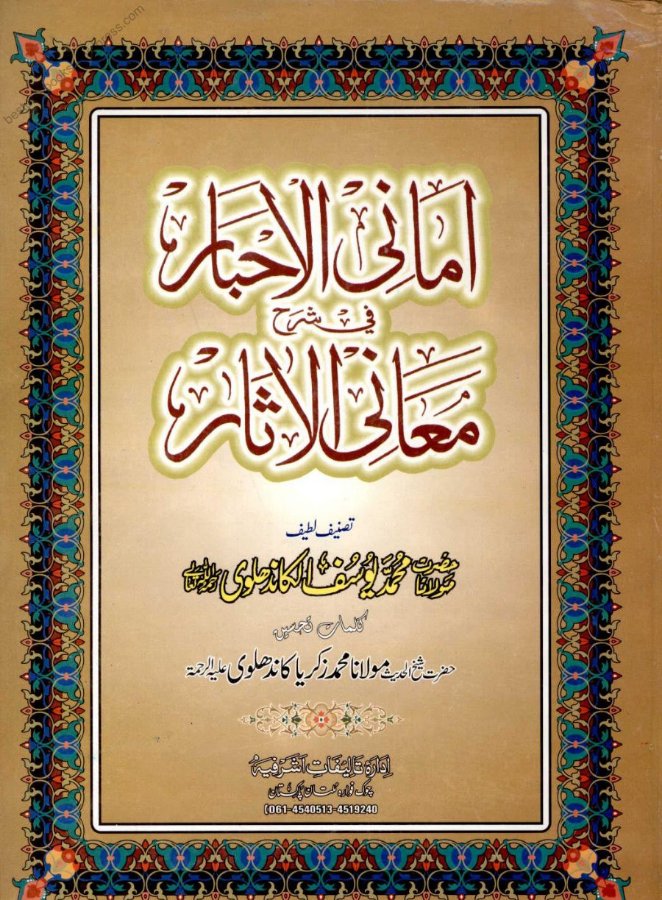
Amani al-Ahbar fi Sharh Ma'ani al-Athar
أماني الأحبار في شرح معاني الآثار
Amani al-Ahbar fi Sharh Ma'ani al-Athar is a Hadith kitab on the Alimiyyah shelf of the Labbaik Library, split into the 53 sections teachers track it by. Add it to a class in one tap and see where every class and student is in it, section by section.
- Publisher
- Idara Talifat-e-Ashrafia, Multan
- Sections
- 53
- Pages
- 434
- Volumes
- 4
Contents of Amani al-Ahbar fi Sharh Ma'ani al-Athar
The 53 sections teachers mark progress against, in order, with their English names and the printed page numbers.
- Volume 1
- 1البسملة وشرح الخطبةBasmalah and commentary on the opening sermon (incl. abrogation, Imam Abu Hanifa's method)pp. 1–3
- 2باب الماء يقع فيه النجاسةChapter: Water into which impurity fallspp. 4–59
- 3باب سور الهرChapter: Leftover water of the catpp. 60–79
- 4باب سور الكلبChapter: Leftover water of the dogpp. 80–97
- 5باب سور بني آدمChapter: Leftover water of human beingspp. 98–118
- 6باب التسمية على الوضوءChapter: Saying Bismillah at wudupp. 119–132
- 7باب الوضوء مرة مرة وثلاثا ثلاثاChapter: Wudu once, twice or thricepp. 133–143
- 8باب فرض مسح الرأس في الوضوءChapter: The obligatory wiping of the head in wudupp. 144–158
- 9باب حكم الأذنين في وضوء الصلاةChapter: Ruling on the ears in wudupp. 159–173
- 10باب فرض الرجلين في وضوء الصلاةChapter: The obligation regarding the feet in wudupp. 174–214
- 11باب الوضوء هل يجب لكل صلاة أم لاChapter: Is wudu required for every prayer?pp. 215–221
- 12باب الرجل يخرج منه المذي كيف يفعلChapter: A man who emits madhy – what should he do?pp. 222–245
- 13باب حكم المني هل هو طاهر أم نجسChapter: Is semen pure or impure?pp. 246–262
- 14باب الذي يجامع ولا ينزلChapter: One who has intercourse without ejaculatingpp. 263–283
- 15باب كل ما غيرت النار هل يوجب الوضوء أم لاChapter: Does eating what fire has touched require wudu?pp. 284–318
- 16باب مس الفرج هل يجب فيه الوضوء أم لاChapter: Touching the private part – does it require wudu?pp. 319–376
- Volume 2
- 17باب المسح على الخفين كم وقته للمقيم والمسافرChapter: Wiping over the leather socks – its duration for resident and travellerpp. 1–21
- 18باب ذكر الجنب والحائض الذي ليس على وضوء وقراءتهم القرآنChapter: Reciting the Qur'an by one in janabah or haid who is not in wudupp. 22–46
- 19باب حكم بول الغلام والجارية قبل أن يأكلا الطعامChapter: Ruling on the urine of a boy and girl before they eat solid foodpp. 47–57
- 20باب الرجل لا يجد إلا النبيذ للتوضؤ أو التيممChapter: The man who finds only nabidh for wudu or tayammumpp. 58–67
- 21باب المسح على النعلينChapter: Wiping over the sandalspp. 68–74
- 22باب المستحاضة كيف تتطهر للصلاةChapter: How the mustahadah purifies herself for prayerpp. 75–106
- 23باب حكم بول ما يؤكل لحمهChapter: Ruling on the urine of animals whose meat is eatenpp. 107–115
- 24باب صفة التيمم كيف هيChapter: How tayammum is performedpp. 116–137
- 25باب غسل يوم الجمعةChapter: Ghusl on Fridaypp. 138–158
- 26باب الاستجمارChapter: Istijmar (cleaning with stones)pp. 159–171
- 27باب الاستنجاء بالعظامChapter: Istinja with bonespp. 172–178
- 28باب الجنب يريد النوم أو الأكل أو الشرب أو الجماعChapter: The junub who wishes to sleep, eat, drink or have intercoursepp. 179–196
- 29كتاب الصلاة – باب الأذان كيف هوKitab as-Salah – Chapter: How the adhan ispp. 197–208
- 30باب الإقامة كيف هيChapter: How the iqamah ispp. 209–224
- 31باب قول المؤذن في أذان الصبح الصلاة خير من النومChapter: The muadhdhin's saying 'prayer is better than sleep' in the Fajr adhanpp. 225–230
- 32باب التأذين للفجر أي وقت هوChapter: At what time the Fajr adhan is calledpp. 231–245
- 33باب الرجلين يؤذن أحدهما ويقيم الآخرChapter: Two men, one giving the adhan and the other the iqamahpp. 246–249
- 34باب ما يستحب للرجل أن يقوله إذا سمع الأذانChapter: What is recommended to say when hearing the adhanpp. 250–263
- 35باب مواقيت الصلاةChapter: Times of the prayerspp. 264–310
- 36باب الجمع بين الصلاتين كيف هوChapter: Combining two prayers – how it is donepp. 311–333
- 37باب الصلاة الوسطى إلى الصلواتChapter: The middle prayer (as-salah al-wusta)pp. 334–344
- 38باب الوقت الذي يصلى فيه الفجر إلى أي وقت هوChapter: The time in which Fajr is prayed and until whenpp. 345–434
- Volume 3
- 39باب رفع اليدين في افتتاح الصلاة إلى أين يبلغ بهماChapter: Raising the hands at the opening of prayer, and how farpp. 1–13
- 40باب ما يقال في الصلاة بعد تكبيرة الافتتاحChapter: What is said in prayer after the opening takbirpp. 14–24
- 41باب قراءة بسم الله الرحمن الرحيم في الصلاةChapter: Reciting Bismillah in prayerpp. 25–57
- 42باب القراءة في الظهر والعصرChapter: Recitation in Zuhr and Asrpp. 58–81
- 43باب القراءة في صلاة المغربChapter: Recitation in Maghrib prayerpp. 82–103
- 44باب القراءة خلف الإمامChapter: Recitation behind the Imampp. 104–161
- 45باب التخفض في الصلاة هل فيه تكبيرChapter: Lowering in prayer: is there takbirpp. 162–178
- 46باب التكبير للركوع والتكبير للسجود والرفعChapter: Takbir for ruku, sujud and rising (including raising hands)pp. 179–228
- 47باب التطبيق في الركوعChapter: Tatbiq in rukupp. 229–235
- 48باب مقدار الركوع والسجودChapter: Duration of ruku and sujudpp. 236–257
- 49باب ينبغي أن يعتدل في الركوع والسجودChapter: Moderation in ruku and sujud (and tashahhud supplications)pp. 258–283
- 50باب الإمام يقول سمع الله لمن حمده هل ينبغي له أن يقول بعدها ربنا ولك الحمد أم لاChapter: The Imam saying Sami'a Allahu liman hamidah — should he then say Rabbana wa lakal-hamdpp. 284–300
- Volume 4
- 51باب القنوت في صلاة الفجر وغيرهاChapter on Qunut in Fajr prayer and otherspp. 1–59
- 52باب ما يبدأ به في السجود اليدين أو الركبتينChapter on what is put down first in sujud: the hands or the kneespp. 60–317
- 53باب الركعتين بعد العصرChapter on the two rak'ahs after Asrpp. 318–334
Only the cover and this outline are shared, never the kitab’s contents. All credit belongs to its author and publisher.
Tracking Amani al-Ahbar fi Sharh Ma'ani al-Athar in Labbaik
- Add it to a class. Pick it from the Library in one tap. Its sections come with it, so nobody types out a contents page.
- Mark progress as you teach. The ustadh marks each section as the class reaches it, and can mark any student who is ahead or behind.
- See where everyone is. The principal sees every year group's place in every kitab, and adult students see their own progress in the portal.
More on running an Alimiyyah programme: Labbaik for Darul Ulooms and Islamic institutes, the Dars-e-Nizami syllabus year by year, and the guide to Darul Uloom software.
More Hadith kitabs in the Library
- Al-Jami' al-Kabir (Sunan at-Tirmidhi) with al-Kawkab ad-Durri · الجامع الكبير (سنن الترمذي) ومعه الكوكب الدري على جامع الترمذي
- Al-Mafatih fi Sharh al-Masabih · المفاتيح في شرح المصابيح
- Al-Ta'liq al-Sabih ala Mishkat al-Masabih · التعليق الصبيح على مشكاة المصابيح
- At-Taqrir ar-Rafi' li-Mishkat al-Masabih · التقرير الرفيع لمشكاة المصابيح
- Athar as-Sunan with at-Ta'liq al-Hasan · آثار السنن مع التعليق الحسن
- Badhl al-Majhud fi Hall Sunan Abi Dawud · بذل المجهود في حل سنن أبي داود
- Bahjat an-Nazar (commentary on Sharh Nukhbat al-Fikr) · بهجة النظر شرح على شرح نخبة الفكر
- Fath al-Bari · فتح الباري بشرح صحيح البخاري
- Fath al-Mulhim bi-Sharh Sahih al-Imam Muslim · فتح الملهم بشرح صحيح الإمام مسلم
- Imaan un-Nazar (Sharh Sharh Nukhbat al-Fikr) · إمعان النظر شرح شرح نخبة الفكر
- Jami at-Tirmidhi · جامع الترمذي
- Jawami al-Kalim: Forty Hadith with Forty Masnun Duas · جوامع الکلم یعنی چہل حدیث مع چہل ادعیہ مسنونہ