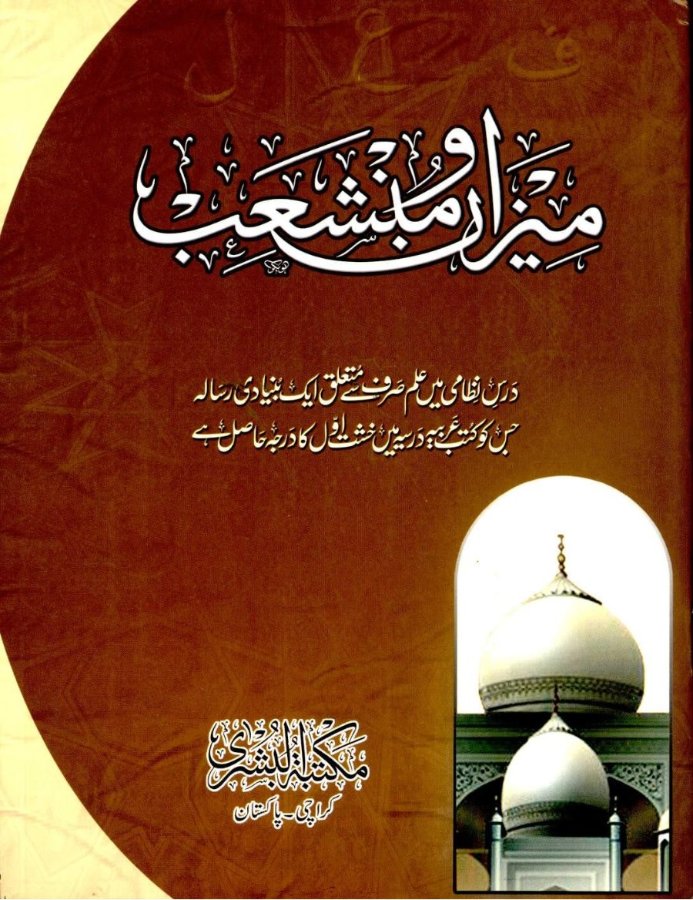
Sarf · Alimiyyah
Mizan wa Munsha'ib
میزان و منشعب
Mizan wa Munsha'ib is a Sarf kitab on the Alimiyyah shelf of the Labbaik Library, split into the 17 sections teachers track it by. Add it to a class in one tap and see where every class and student is in it, section by section.
- Publisher
- Maktabat al-Bushra, Karachi (new revised coloured edition)
- Sections
- 17
- Pages
- 60
Contents of Mizan wa Munsha'ib
The 17 sections teachers mark progress against, in order, with their English names and the printed page numbers.
- 1میزان الصرف — مقدمہ: فعل ماضی (ماضی، مستقبل و حال، معروف و مجہول، منفی، فوائد نافعہ)Mizan as-Sarf, Introduction: Fi'l Madi (past, future and present, active and passive, negative, useful notes)pp. 5–9
- 2فعل مضارع (علامات، معروف و مجہول، منفی، لن، لم، لام تاکید، نون ثقیلہ و خفیفہ)Fi'l Mudari' (signs, active and passive, negative, Lan, Lam, Lam at-Ta'kid, Nun Thaqilah and Khafifah)pp. 10–18
- 3بحث امر (قاعدہ بنائے امر، معروف و مجہول، بانون ثقیلہ و خفیفہ)Amr (imperative): rule of formation, active and passive, with Nun Thaqilah and Khafifahpp. 19–21
- 4بحث نہی (قاعدہ بنائے نہی، بانون ثقیلہ و خفیفہ)Nahy (prohibition): rule of formation, with Nun Thaqilah and Khafifahpp. 22–24
- 5اسم فاعل و مفعول، قاعدہ بنائے اسم فاعلIsm Fa'il and Ism Maf'ul, rule of forming the Ism Fa'ilp. 25
- 6اسم ظرف و اسم آلہ، قاعدہ بنائے اسم ظرفIsm Zarf and Ism Alah, rule of forming the Ism Zarfp. 26
- 7اسم آلہ و اسم تفضیل، قاعدہ بنائے اسم آلہIsm Alah and Ism Tafdil, rule of forming the Ism Alahpp. 27–28
- 8منشعب — مقدمہ: بحث ثلاثی و رباعیMunsha'ib, Introduction: Thulathi and Ruba'i (triliteral and quadriliteral)p. 29
- 9ثلاثی مجرد: مطرد (باب اول تا پنجم)Thulathi Mujarrad: regular (Bab 1 to 5)pp. 30–34
- 10ثلاثی مجرد: شاذ (باب اول تا سوم)Thulathi Mujarrad: irregular (Bab 1 to 3)pp. 35–37
- 11ثلاثی مزید فیہ غیر ملحق بر باعی: افتعال تا افعیعال و افعوالThulathi Mazid Fihi not attached to the Ruba'i: Ifti'al to If'i'al and If'iwalpp. 38–42
- 12افاعل، افعال، تفعیل و تفعل، مفاعلہIffa'ul, If'al, Taf'il and Tafa''ul, Mufa'alahpp. 43–46
- 13رباعی مجرد، باب تفاعل و فعللهRuba'i Mujarrad, Bab Tafa'ul and Fa'lalahp. 47
- 14رباعی مزید فیہ: تفعلل، افعنلال و افعلالRuba'i Mazid Fihi: Tafa'lul, If'inlal and If'illalpp. 48–49
- 15ثلاثی ملحق بر باعی: فعللۃ، فعنلۃ، فوعلۃ، فیعلۃ، فعلاۃThulathi attached to the Ruba'i: Fa'lalah, Fa'nalah, Faw'alah, Fay'alah, Fa'lahpp. 50–53
- 16ملحق بتدحرج و احرنجام: تفعلل، تفعنل، تمفعل، تفعلۃ، تفوعل، تفعول، تفعیل، تفعل، افعنلال، افعنلاءAttached to Tadahruj and Ihranjam: Tafa'lul, Tafa'nul, Tamaf'ul, Tafa'lah, Tafaw'ul, Tafa'wul and otherspp. 54–58
- 17منشعب منظومMunsha'ib in versepp. 59–60
Only the cover and this outline are shared, never the kitab’s contents. All credit belongs to its author and publisher.
Tracking Mizan wa Munsha'ib in Labbaik
- Add it to a class. Pick it from the Library in one tap. Its sections come with it, so nobody types out a contents page.
- Mark progress as you teach. The ustadh marks each section as the class reaches it, and can mark any student who is ahead or behind.
- See where everyone is. The principal sees every year group's place in every kitab, and adult students see their own progress in the portal.
More on running an Alimiyyah programme: Labbaik for Darul Ulooms and Islamic institutes, the Dars-e-Nizami syllabus year by year, and the guide to Darul Uloom software.
More Sarf kitabs in the Library
- Abwab al-Sarf al-Jadeed (Arabic version) · أبواب الصرف الجديد (تعريب)
- Arabi Safwat al-Masadir (Jadid) · عربی صفوۃ المصادر جدید
- Ilm us-Sarf (Awwalain) · علم الصرف (اوّلین)
- Ilm us-Seghah · علم الصيغة
- Irshad as-Sarf (Arabic edition) · إرشاد الصرف باللغة العربية
- Irshad us-Sarf (with the Imdad us-Sarf commentary) · إرشاد الصرف (مع حاشية إمداد الصرف)
- Mu'jam Tasrif al-Af'al al-'Arabiyyah · معجم تصريف الأفعال العربية
- Qawaneen Ilm as-Sarf · قوانین علم صرف
- Sharh Ilm as-Sarf Awwalain · شرح علم الصرف اولین
- Taisir ul Mubtadi · تیسیر المبتدی
- Taysir al-Abwab · تیسیر الابواب