Sarf · Alimiyyah
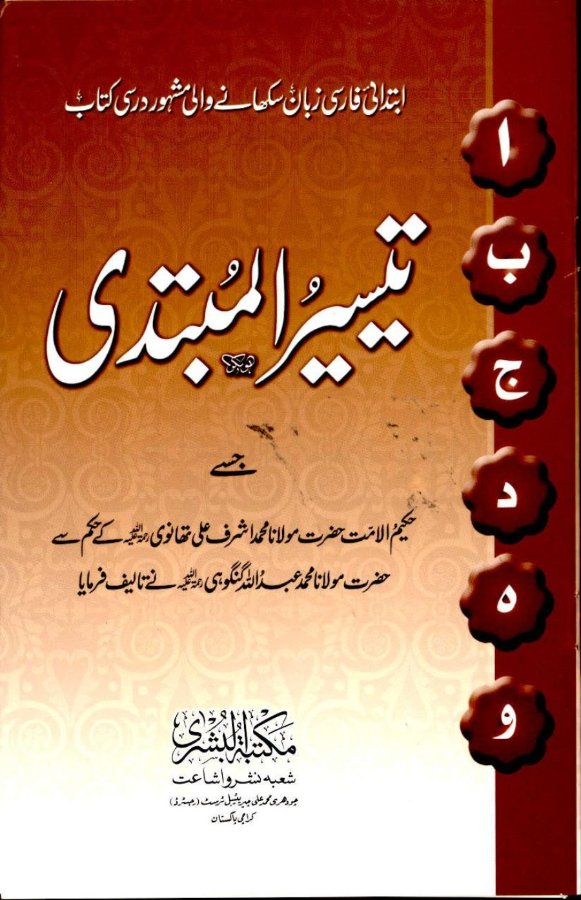
Taisir ul Mubtadi
تیسیر المبتدی
Taisir ul Mubtadi is a Sarf kitab on the Alimiyyah shelf of the Labbaik Library, split into the 22 sections teachers track it by. Add it to a class in one tap and see where every class and student is in it, section by section.
- Sections
- 22
- Pages
- 41
Contents of Taisir ul Mubtadi
The 22 sections teachers mark progress against, in order, with their English names and the printed page numbers.
- 1باب اول در صرف فارسی — حرکت، واو اور یاء کی تعریفاتBab 1 on Persian Sarf: definitions of Harakah, Waw and Yap. 3
- 2کلمہ کی اقسام اور زمانےTypes of Kalimah (word) and tensesp. 4
- 3فعل کی اقسامTypes of Fi'l (verb)pp. 5–6
- 4فارسی کے اہم مصادر اور مضارعImportant Persian Masdars (infinitives) and Mudari'pp. 7–18
- 5ماضی مطلق بنانے کا قاعدہRule for forming the Madi Mutlaq (simple past)p. 19
- 6ماضی قریب، بعید اور استمراری بنانے کا قاعدہRule for forming the Madi Qarib, Ba'id and Istimrari (present perfect, past perfect, past continuous)p. 20
- 7ماضی احتمالی اور تمنائی بنانے کا قاعدہRule for forming the Madi Ihtimali and Tamanna'i (past of doubt and of wish)p. 21
- 8مضارع کے باقی صیغے، حال، مستقبل، مثبت و منفیRemaining forms of the Mudari': present, future, affirmative and negativep. 22
- 9فعل منفی، امر حاضر اور نہی حاضر بنانے کا قاعدہRule for forming the negative verb, Amr Hadir and Nahy Hadirp. 23
- 10اسم فاعل اور اسم مفعولIsm Fa'il and Ism Maf'ul (active and passive participles)p. 24
- 11جمع، فاعل و مفعول بہ، معروف و مجہول، فعل مجہولPlurals, Fa'il and Maf'ul Bihi, active and passive, the passive verbpp. 25–26
- 12باب دوم نحو فارسی — مفرد و مرکب، مرکب کی اقسامBab 2 on Persian Nahw: Mufrad and Murakkab (simple and compound), types of Murakkabp. 27
- 13مرکب غیر مفید اور مرکب توصیفیMurakkab Ghayr Mufid and Murakkab Tawsifi (incomplete and adjectival compounds)p. 28
- 14جملہ کی قسمیںTypes of Jumlah (sentence)p. 29
- 15ضمائرDama'ir (Pronouns)pp. 30–31
- 16اسمائے اشارہ اور اسم موصولAsma' al-Isharah and Ism Mawsul (demonstratives and relative pronouns)p. 32
- 17منادی اور فاعل و مفعول مالم یسم فاعلہ و مفعول بہMunada, Fa'il, Maf'ul ma lam yusamma Fa'iluhu (subject of passive) and Maf'ul Bihip. 33
- 18لازم و متعدی، شرط و جزا، حروف شرطLazim and Muta'addi (intransitive and transitive), Shart and Jaza, conditional particlesp. 34
- 19ظرف یا مفعول فیہ اور گنتیZarf or Maf'ul Fihi (adverbs of time and place), and countingp. 35
- 20عطف و معطوف و معطوف علیہ'Atf, Ma'tuf and Ma'tuf 'Alayh (conjunction and conjoined)p. 36
- 21حروف معانی — حروف مفردہHuruf al-Ma'ani (Particles of meaning): single-letter particlespp. 37–39
- 22حروف مرکبہCompound particlespp. 40–41
Only the cover and this outline are shared, never the kitab’s contents. All credit belongs to its author and publisher.
Tracking Taisir ul Mubtadi in Labbaik
- Add it to a class. Pick it from the Library in one tap. Its sections come with it, so nobody types out a contents page.
- Mark progress as you teach. The ustadh marks each section as the class reaches it, and can mark any student who is ahead or behind.
- See where everyone is. The principal sees every year group's place in every kitab, and adult students see their own progress in the portal.
More on running an Alimiyyah programme: Labbaik for Darul Ulooms and Islamic institutes, the Dars-e-Nizami syllabus year by year, and the guide to Darul Uloom software.
More Sarf kitabs in the Library
- Abwab al-Sarf al-Jadeed (Arabic version) · أبواب الصرف الجديد (تعريب)
- Arabi Safwat al-Masadir (Jadid) · عربی صفوۃ المصادر جدید
- Ilm us-Sarf (Awwalain) · علم الصرف (اوّلین)
- Ilm us-Seghah · علم الصيغة
- Irshad as-Sarf (Arabic edition) · إرشاد الصرف باللغة العربية
- Irshad us-Sarf (with the Imdad us-Sarf commentary) · إرشاد الصرف (مع حاشية إمداد الصرف)
- Mizan wa Munsha'ib · میزان و منشعب
- Mu'jam Tasrif al-Af'al al-'Arabiyyah · معجم تصريف الأفعال العربية
- Qawaneen Ilm as-Sarf · قوانین علم صرف
- Sharh Ilm as-Sarf Awwalain · شرح علم الصرف اولین
- Taysir al-Abwab · تیسیر الابواب